Home › Commercial Concrete Sealing and Surface Treatments
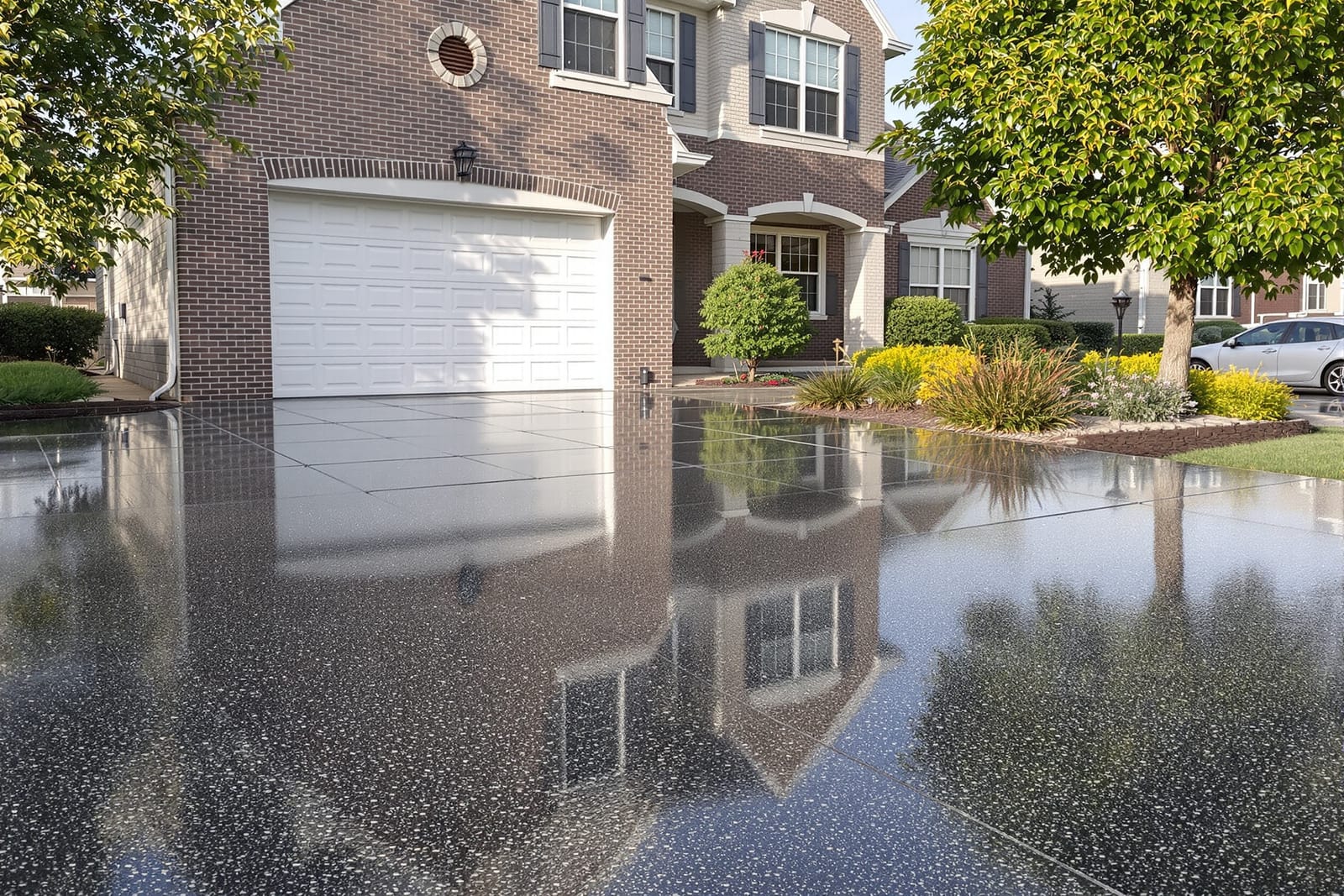
Commercial concrete sealing in Madison, WI protects floors, walkways, and decks from traffic, chemicals, and moisture. We apply industrial sealers, traffic coatings, and non slip treatments tailored to your facility. Maintain clean, safe, long lasting surfaces.
Superior Concrete Madison provides professional commercial concrete sealing throughout Madison, WI, Wisconsin and the surrounding area. Our licensed, insured crew delivers safe, clean, on-time work with a free estimate before anything begins. Call (608) 447-6820 or request your free quote.
Commercial Concrete Sealing for Madison Businesses
Concrete in Madison works hard. Between winter freeze-thaw cycles, road salt, and heavy commercial traffic, unsealed slabs break down faster than most owners expect. Superior Concrete Madison focuses on commercial concrete sealing that matches how local properties are actually used, from warehouse loading docks on the Beltline to customer walkways near Capitol Square.
When we talk about commercial concrete sealing, we mean a full system: surface evaluation, targeted repairs, deep cleaning, and the right sealer or surface treatment for the specific environment. Retail entrances, restaurant patios, municipal sidewalks, and manufacturing floors all need different products and prep methods. Our goal is simple: keep your concrete functional, safe, and presentable for as long as possible, without overselling coatings that do not fit your budget or use.
We regularly work on buildings from the 1960s and 1970s with original slabs, newer tilt-up warehouses, and mixed-use developments in areas like East Washington Avenue. Each age and mix design of concrete responds differently to sealers. Superior Concrete Madison tests absorption, looks for prior coatings, and factors in how snow removal is done on your site so the sealing system survives more than one winter.
How Our Commercial Concrete Sealing Process Works
A proper sealing job is mostly in the preparation. We start with a detailed walk-through of your property to map out cracking, spalling, previous patching, and drainage patterns. For loading zones and dumpster pads we look closely at oil saturation and de-icer buildup, which are common in Madison winters.
Surface prep typically includes mechanical cleaning. For exterior flatwork we use high pressure washing with rotary surface cleaners and, if needed, hot water degreasing in areas stained by hydraulic fluid or cooking oil. On interior floors we rely on dust-controlled grinding or scrubbing so there is no overspray on adjacent equipment or inventory.
Cracks and surface defects are addressed before we seal. Hairline cracks may be left if the chosen sealer is designed to bridge them, but wider cracks usually get routed and filled with flexible polyurethane or semi-rigid epoxy depending on whether forklifts cross them. Pop-outs and spalls are patched with polymer-modified repair mortars or rapid-setting materials when downtime must be limited.
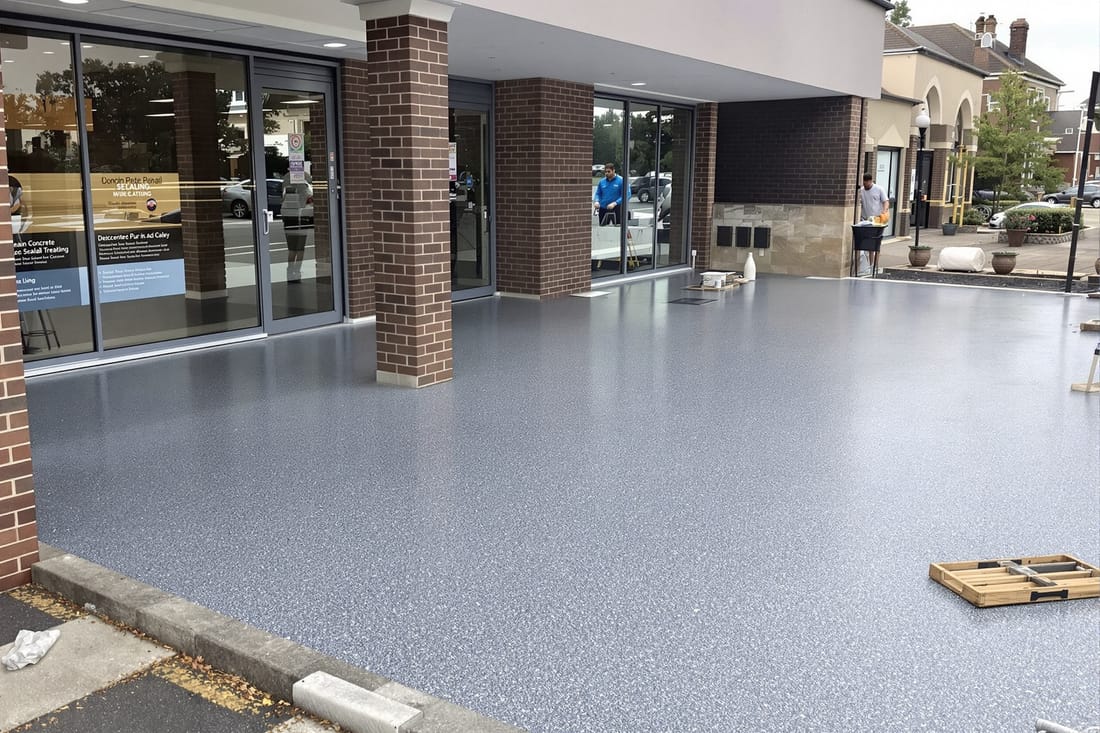
Once the surface is clean, dry, and repaired, we apply the selected sealer or surface treatment using low pressure sprayers, rollers, or squeegee application for thicker coatings. Coverage rates are adjusted based on how porous your concrete is, not just the label on the pail. Final inspection includes slip testing in key zones like ramps and entrances and we mark off curing times clearly so your staff know when it is safe to reopen areas.
Sealer and Surface Treatment Options for Madison Conditions
Commercial concrete sealing is not one product. Superior Concrete Madison matches materials to your concrete and its environment.
For exterior sidewalks, plazas, and parking decks we often recommend penetrating sealers such as silane or siloxane. These absorb into the surface and chemically react within the pores to repel water and chlorides. They are ideal for resisting salt tracked in from East Washington, John Nolen, and local side streets, and they help limit scaling from freeze-thaw cycles.
For decorative or high-visibility areas like stamped concrete patios in restaurant districts or colored entrance plazas, we may use acrylic or polyurethane film-forming sealers. These create a visible layer that can deepen color and provide a satin or gloss finish. Non-slip additives are blended in to balance appearance with traction, especially important when snow melts and refreezes.
Interior warehouse and shop floors often benefit from densifiers and hardeners, usually lithium or sodium silicate based. These are not traditional sealers but they chemically react with the concrete to reduce dusting and make the surface more abrasion resistant. In heavier industrial settings or service bays we may specify thicker epoxy or polyaspartic coatings that can handle hot tires, chemical spills, and frequent forklift traffic.
For properties along heavily salted routes or ramps to underground parking, we may combine treatments. A densifier is used first to harden the slab, followed by a penetrating sealer for chloride resistance. That layered approach tends to hold up better under Madison winters than a single product solution.
What Affects Cost and Project Timing
Owners often ask why commercial concrete sealing bids vary so much. The main drivers of cost are preparation needs, product type, and access.
Preparation: Concrete that is heavily stained with oil, coated with old paint, or deteriorated from years of salt exposure takes more time and materials to rehabilitate. A nearly new slab on a recent construction in Fitchburg might only need light cleaning and a single application. A 40 year old loading dock with deep pitting may require grinding, patching, and a premium sealer to make the work worthwhile.
Product choice: Penetrating sealers are usually more economical than multi-layer epoxy or polyaspartic coating systems. Decorative sealers with color, flakes, or special traction additives cost more in materials and labor. Superior Concrete Madison walks you through the expected service life and maintenance requirements so you can decide if a higher upfront cost makes sense over the next 5 to 10 years.
Access and downtime: In tight downtown locations, simply getting equipment and materials in and out can add time. If your business needs work done overnight or in phases to keep certain entries open, we schedule staging accordingly. Faster curing products are available but often cost more. We will spell out options, such as a standard curing sealer that needs 24 hours versus a rapid-cure system that can take forklift traffic in as little as 4 to 6 hours.
Season: In Madison, exterior sealing typically stops once daytime temperatures consistently fall below the manufacturer limits, often in late fall. Trying to seal cold, damp concrete is a recipe for failure. Planning your project between late spring and early fall usually yields the best results and can be more cost effective because schedule pressures are lower than during the final pre-winter rush.
Common Concrete Problems We See in Madison and How We Address Them
Local climate and maintenance habits create predictable problems in commercial concrete. Understanding these helps you decide what to do before spending on sealing.
Salt scaling is one of the biggest issues. Sidewalks and steps near parking lots accumulate rock salt and calcium chloride from winter maintenance. This leads to flaking and rough surfaces. In mild cases, we mechanically clean and then apply a penetrating sealer to slow further damage. In advanced cases, patching or a thin overlay may be necessary before sealing, otherwise the sealer only preserves a failing surface.
Joint failure is another common problem in warehouse and retail back-of-house areas. Joints that were originally filled with cheap caulk tend to break down under pallet jack and forklift traffic, creating trip hazards and edges that chip. Superior Concrete Madison removes failed joint filler, cleans the sides, and installs semi-rigid joint fillers that can transfer wheel loads without pulverizing.
Oil and grease contamination is frequent near service bays, restaurants, and dumpster pads. Simply applying a sealer over these stains does not work. We use degreasers, hot water extraction, and sometimes localized grinding to pull contaminants from the pores. In stubborn cases where oils have deeply penetrated, we may recommend a thicker coating system that is less sensitive to minor residual staining.
For interior floors in older industrial buildings, surface dusting and soft concrete are typical. Here we often install a chemical densifier to harden the surface and reduce dust, followed by a light sealer or guard coat that improves cleanability. This combination can extend the life of older slabs without the cost of full replacement.
What Madison Property Owners Should Clarify Before Hiring
Before you sign a contract for commercial concrete sealing, there are a few points you should clarify so expectations match reality.
Ask what specific products will be used, and why they are appropriate for your concrete and use. You should receive data sheets that state recommended temperature ranges, cure times, and slip resistance information. If a contractor will not name products or only says they use a generic sealer, that is a concern.
Discuss surface preparation in detail. Will the contractor pressure wash, degrease, grind, repair cracks, and address joints, or are they only planning to spray and leave. Superior Concrete Madison includes prep steps and repair allowances clearly in our proposals so you can compare them fairly to other bids.
Clarify how your operations will be affected. Confirm curing times for foot traffic, pallet jacks, forklifts, and vehicle traffic. Make sure there is a plan for signage, barricades, and coordination with your staff, particularly in multi-tenant buildings or public-facing spaces.
Finally, talk about maintenance. A sealer is not a one-time fix. Ask how often your specific system should be inspected or re-applied, what cleaning agents are safe, and how to handle future repairs without compromising the sealer. For example, some high pH cleaners used in food service can prematurely dull or break down certain coatings.
If you are planning a project in Madison, Fitchburg, Middleton, or nearby communities, Superior Concrete Madison can walk through your property, prioritize critical areas, and propose a sealing and surface treatment plan that matches your budget and operations rather than a one-size-fits-all package.